Tree Comparison Guide
Red Maple (Acer rubrum)
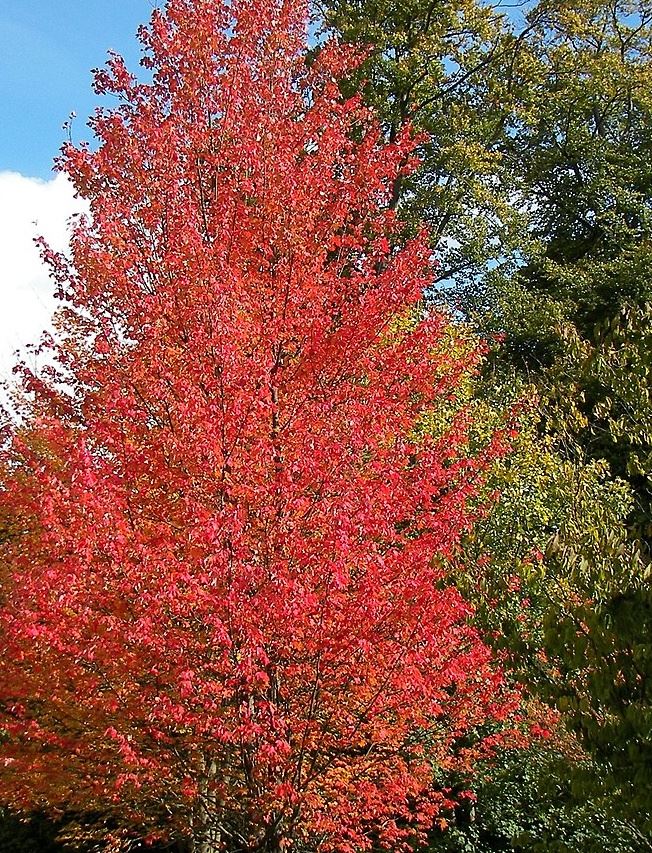
Use A classic shade tree with fast growth and outstanding fall color ranging from orange to deep red. Provides cooling shade, wildlife value, and strong visual presence.
Conditions Adaptable to a wide range of soils, including moist and slightly acidic soils. Prefers full sun to partial shade. Moderately drought tolerant once established.
Location Best planted in lawns, parks, or along streets where its mature canopy has room to spread. Avoid very compacted or alkaline soils.
Black Tupelo / Black Gum (Nyssa sylvatica)
Conditions Prefers moist, well-drained, acidic soils. Full sun produces the best fall color, though it tolerates partial shade. Slow to moderate growth.
Location Ideal for naturalized landscapes, woodland edges, rain gardens, or larger residential yards. Allow space for its deep root system and strong vertical form.
Red Oak (Quercus rubra)
Conditions Grows best in well-drained soils and full sun. Moderately drought tolerant once established. Slower growth than maple but very durable.
Location Best for parks, large yards, and open spaces where it can mature undisturbed. Avoid planting too close to buildings due to its size.
Eastern Redbud (Cercis canadensis)
Conditions Prefers well-drained soil and partial sun, though it tolerates full sun with adequate moisture. Moderate drought tolerance once established.
Location Perfect near patios, walkways, garden edges, or as an understory tree beneath larger canopies. Works well in residential landscapes.
Washington Hawthorn (Crataegus phaenopyrum)
Conditions Full sun is best for flowering and fruiting. Tolerates a variety of soils but prefers good drainage. Moderate drought tolerance.
Location Ideal for small yards, along streets, or as a specimen tree. Thorns make it useful as a natural barrier but not ideal near play areas.
River Birch (Betula nigra)
Conditions Thrives in moist to wet soils and full sun to partial shade. More heat-tolerant than other birches and well suited to Zone 6b.
Location Best planted near water features, low spots, rain gardens, or naturalized areas. Often planted in multi-stem groupings for visual impact.